-
 Continue reading →: Adapting The Right Performance Metrics for Agile Success
Traditional KPIs are suited for stable environments, focusing on static goals and predictable outcomes. However, in agile contexts, adaptability and continuous learning are essential. Agile performance assessment should prioritize team collaboration, value delivery, and responsive metrics over rigid targets, allowing for evolving objectives and real-time feedback to facilitate improvement amidst…
-
 Continue reading →: How Backend Teams Can Finally Link Their OKRs to Company Strategy (With a Little Help from AI)
If you’re running a backend or platform team, you’ve probably felt this: leadership wants business outcomes, but your daily work is pipelines, latency, SLOs, and migrations. Bridging that gap is exactly what good OKRs are for—and also why so many OKRs fall flat. Let’s fix that, using AI as your…
-
Continue reading →: Fast Work Feels Good—Until It Doesn’t
The quote by John Bergman highlights the common tendency to prioritize “doing it over” rather than “doing it right,” which often leads to superficial progress but deeper issues later. Emphasizing the need for courage, discovery, and patience, the piece advocates for a cultural shift towards valuing thoughtful questions and long-term…
-
Continue reading →: How Backend & Infra Teams Can Align Team OKRs to Company Strategy
Aligning backend or infrastructure OKRs with company strategy is challenging, especially in large organizations. This guide offers a practical approach to creating measurable outcomes that connect daily work to strategic goals. Key steps include anchoring on company bets, mapping capabilities, defining objectives, and examining dependencies to enhance alignment.
-
Continue reading →: AI Use Cases in Writing Better OKRs
The author emphasizes the benefits of using AI tools like ChatGPT in writing OKRs. AI improves efficiency by quickly generating drafts, clarifying vague objectives, and aligning goals with company strategy. It encourages realistic targets, adds comprehensive key results, and ensures a balanced approach, ultimately enhancing the OKR process and saving…
-
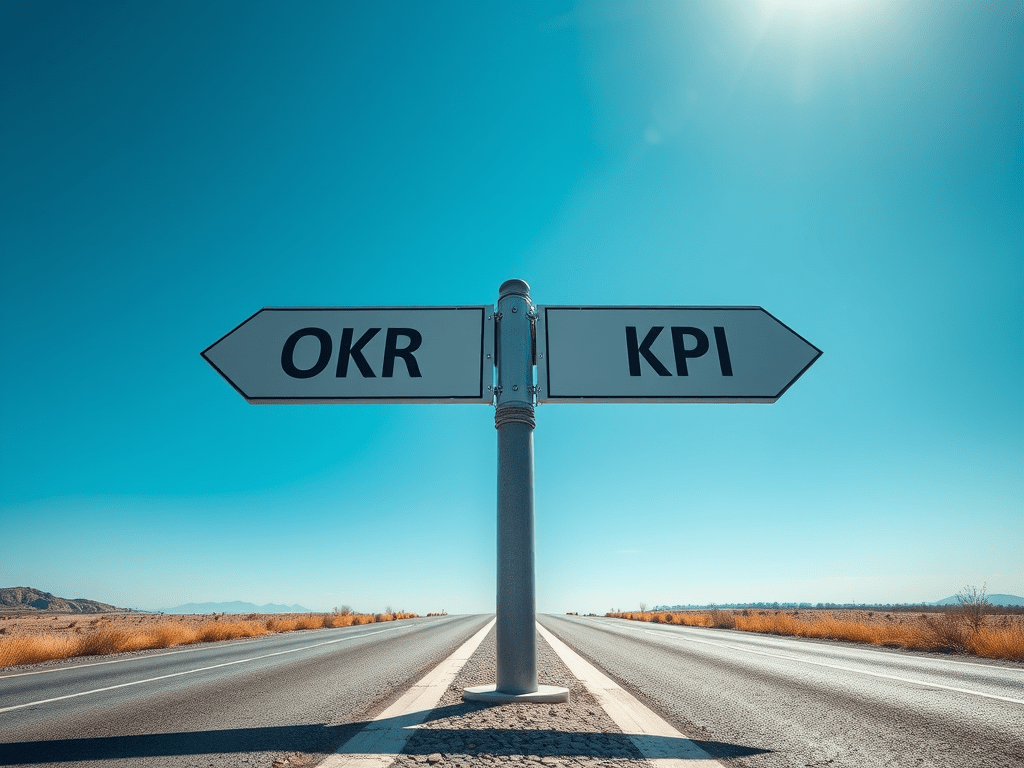 Continue reading →: Preventing OKRs from Collapsing into KPIs
OKRs are intended to inspire teams beyond routine tasks, but often devolve into mere KPIs due to imbalances. This occurs when objectives lack narrative, focus narrowly on metrics, or confuse roles. The reliance on measurable outcomes overshadows important aspects like quality and collaboration. Balanced OKRs serve as a directional compass…
-
 Continue reading →: Imbalanced OKRs: The Hidden Trap That Derails Your Goals
OKRs (Objectives and Key Results) often fail due to imbalances rather than overly ambitious goals. Imbalances can arise from vagueness, excessive metrics, a focus on outputs over outcomes, one-dimensional targets, and neglecting risks. Balanced OKRs improve clarity, trust, alignment, and impact, guiding teams towards meaningful and sustainable success.
-
 Continue reading →: Use AI to Decode Job Descriptions and Prepare for Interviews Like a Pro
If you’ve ever walked out of an interview thinking, “I could’ve done better,” you’re not alone. There are a few common stumbling blocks many of us run into: To help with these issues, there’s a simple yet powerful approach using AI. It involves a structured prompt that guides you through…
-
 Continue reading →: Why China’s Consumer AI Struggles to Charge Users: The Feed-Brain Effect
OpenAI vs. China’s Consumer AI Models OpenAI crossed the $10B ARR mark by August 2025. Meanwhile in China, leading consumer LLM apps—Doubao, DeepSeek, Yuanbao, Tongyi—are still free. Not ¥20 a month. Not even ¥2. There are plenty of reasons for this gap, but let’s zoom in on one that doesn’t…
Hello,
I’m Lisa Guan

Welcome to my cozy corner of the internet, where I share all things User-Centric Design, OKRs, Agile, and how AI can boost them. Here, I invite you to join me on a journey of innovation and reimagining work with a spark of creativity. Let’s explore boldly!
Let’s connect
Join the fun!
Stay updated with our latest tutorials and ideas by joining our newsletter.
Categories
- Agile Team Performance management (1)
- AI production insights (2)
- AI Project Balanced Scorecard (2)
- Creative AI Playground (5)
- Human-centered design (1)
- Inside the Chinese AI Scope (1)
- OKR (8)
- Uncategorized (2)
Cloud tags
360 degrees feedbacks Agile Team Performance Agile Team performance assessment Agile Team Performance management AI generate fun pictures AI in OKR writing AI interview preparation AI monetization in China candidate differentiation chatGPT image prompt China consumer AI Do it over do it right Doubao DeepSeek Yuanbao Tongyi feed-brain effect Fun award for kids job description analysis KPI KPI for Agile team OKR OKR best practices OKR collaps into KPI OKR vs KPI Outcome vs output Prompting skills recommendation engines strategic interview tips Team performance Using ChatGPT for OKRs value storytelling ways of working
 Lisa Guan's Innovation World